
This is part three of the three-part series. Beef For the Win? Small Farms, Outsized Share: New England and New York
A federal grant is a big undertaking, regardless of project size, whether you are applying to the larger USDA Rural Development grants or the Rural Energy for America Program (REAP) or to the NIFA research or education grants.
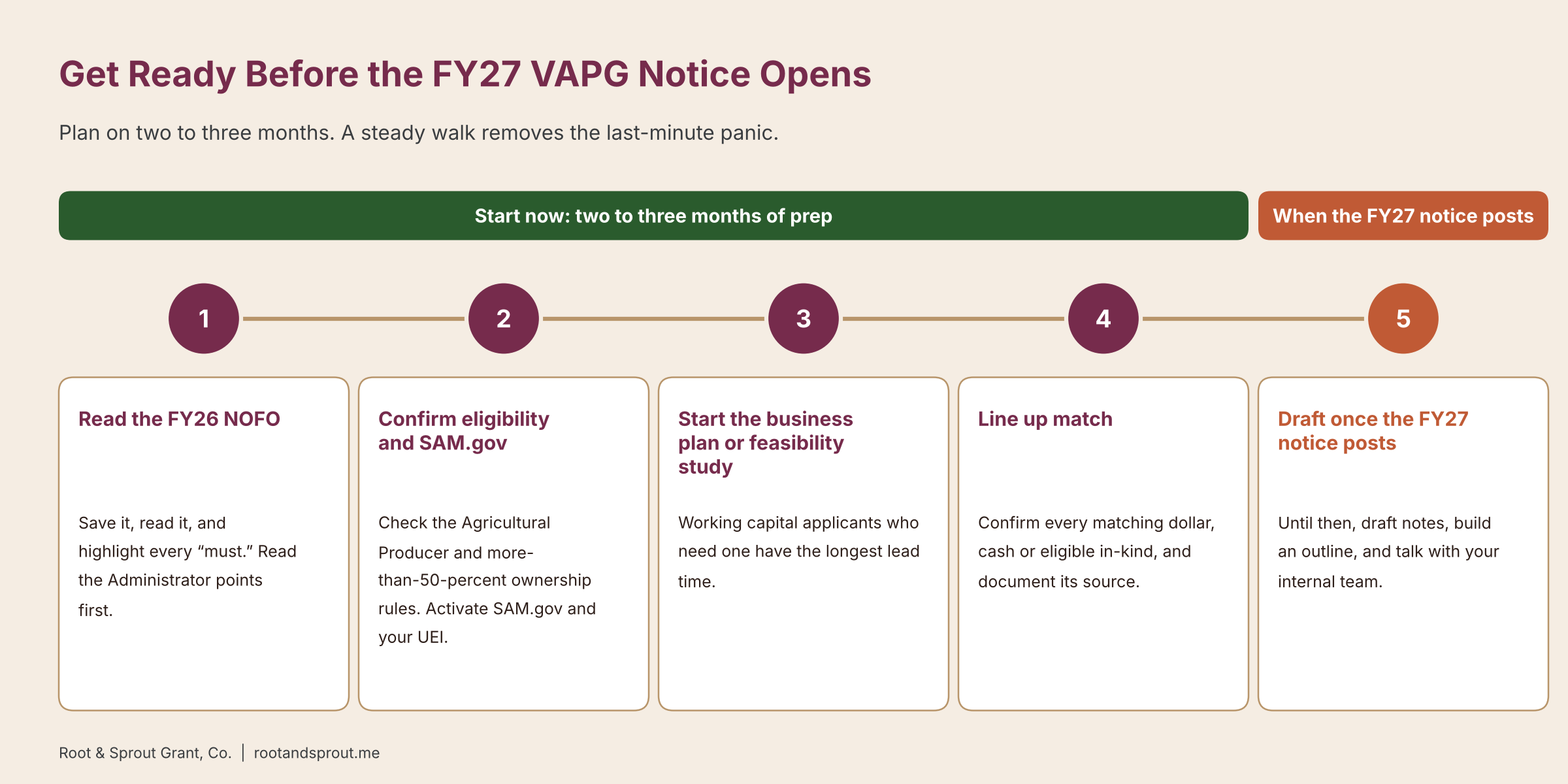
For applicants who have never pursued federal funding, it is not uncommon for a grant writer to spend 80 to 150+ hours guiding the application process, developing narratives, preparing budgets, and ensuring compliance with program requirements. Clients should expect to invest 20 to 40 or more hours gathering financial records, production and operational data, organizational documents, and supporting materials, and reading and editing drafts. If you hate Excel, find someone who loves Excel. If you hate reading long drafts, find a team member who does. Plan on two to three months to get ready. A steady walk removes the last-minute panic.
Start with the previous year’s NOFO
If you have never read a Notice of Funding Opportunity, pull up a cozy blanket and settle in for the least exciting reading of your life. Here is last year’s FY26 link. Save it to your computer, read it, and highlight every sentence with the word “must.” Early on, a friend told me that “must” always means must. "Recommended," "advised," and "suggested" also mean must if you want to submit a competitive application.
Federal grants have changed a lot in the past two years, but last year’s notice is still the place to start getting ready. Do not start writing the application until the FY27 notice is posted and your ducks are in a row. Between your business plan and the application, this can be a 40-page document. Questions change, priorities shift, and your outcomes may change with them.
Read the Administrator points first
As I wrote in How New England and New York Did in VAPG, FY26, read the Administrator points first and look for anything new. Does your project fit one or two of them? Then read the eligibility section and the definitions in the Code of Federal Regulations, 7 CFR 4284.903.
Eligibility
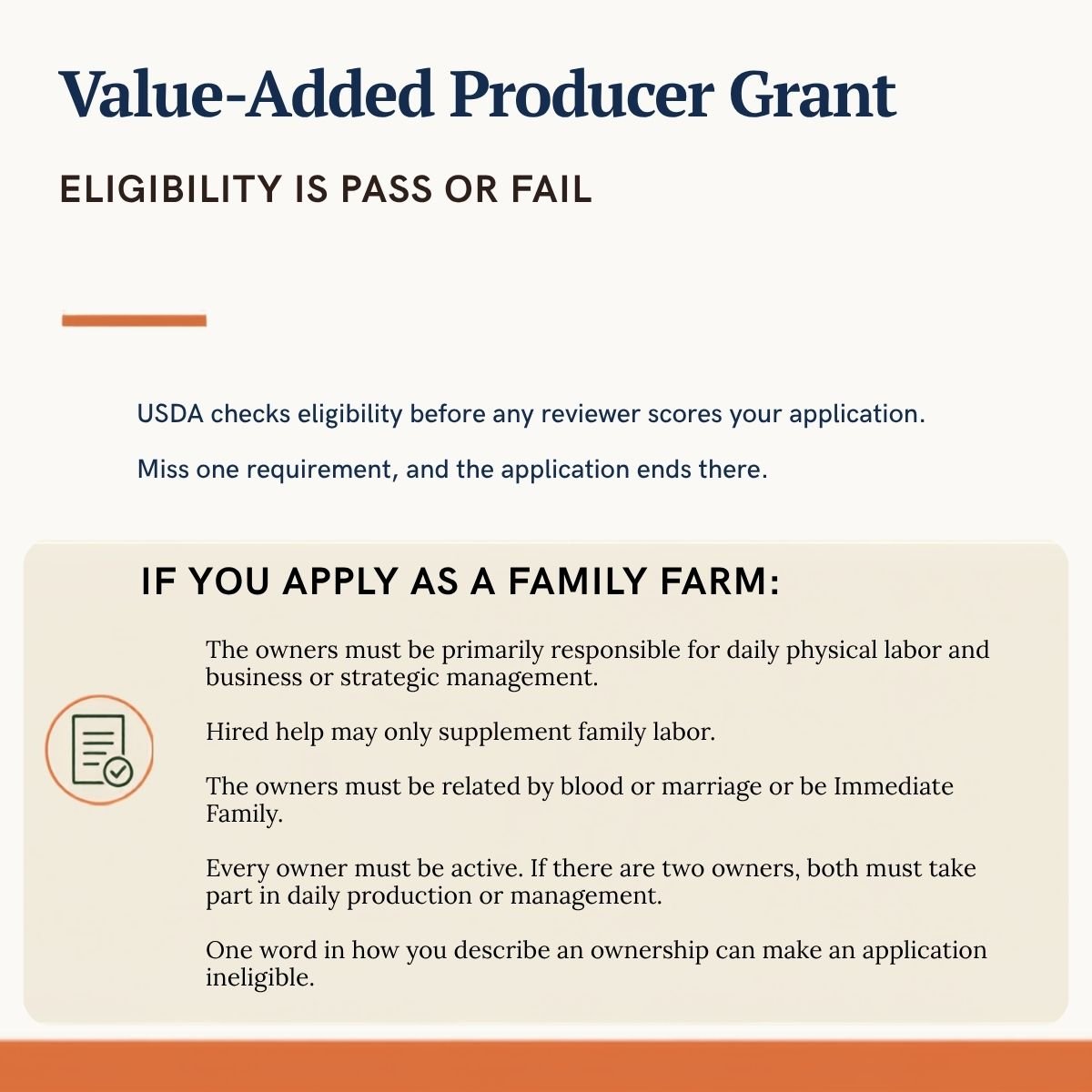
USDA checks eligibility before any reviewer scores your application. Miss one requirement, and the application ends there.
You must be an Agricultural Producer. That means a for-profit business or entity 100 percent owned and controlled by an individual, entity, or Family Farm. It must produce the commodity through participation in day-to-day labor, management, and field operations, or hold the legal right to harvest the commodity.
You must produce and own more than 50 percent of the commodity used in the project and keep ownership from its raw state through production and marketing.
You must be producing that commodity now.
You must have an active SAM.gov registration before you submit, and a valid UEI in the application.
Planning a grant or working capital grant
A planning grant paid up to $50,000 in FY26. It may only pay for a feasibility study, business plan, and/or marketing plan prepared by a qualified consultant. Planning projects can identify a market window, potential buyers, a distribution system, and possible promotional campaigns.
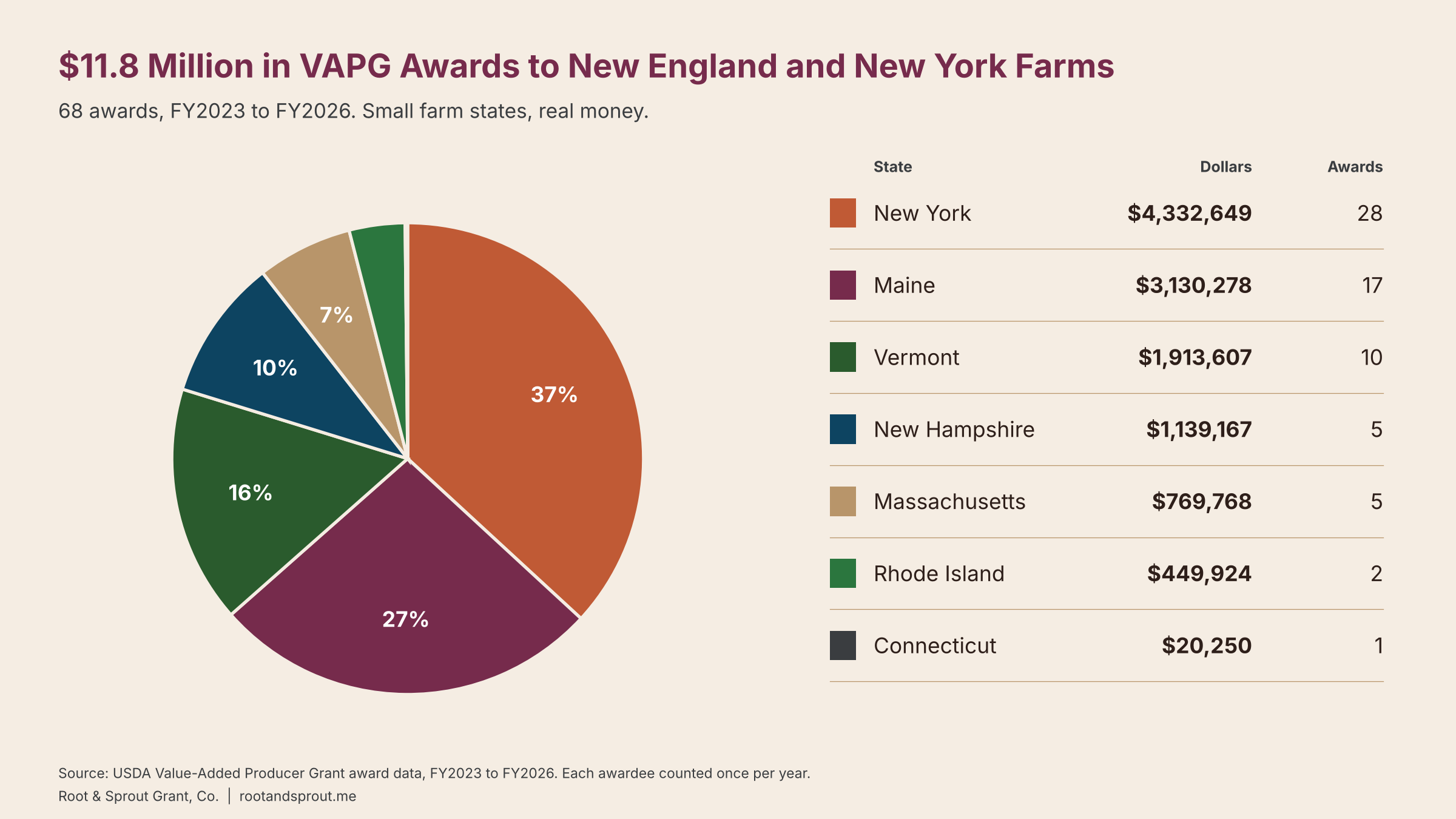
A working capital grant paid up to $200,000 in FY26. It pays to operate or expand a value-added business. A market expansion project takes an existing value-added product into new geographic or demographic markets. The applicant must have produced and marketed that product for at least two years at the time of application. Planning grants are a small share of awards. About 14 of the 197 FY26 awardees in USDA’s award data received planning grants. That is roughly 7 percent of awards and $454,380 of $17,090,000, about 1.7 percent of the dollars. In New England, 1 of 8 awards was a planning grant: a Connecticut ice cream market study for $20,250. All 3 New York awards were working capital.
A working capital applicant who needs a new or updated business plan or feasibility study has the longest lead time of anyone. That is the strongest reason to start now.
Match
Every grant dollar needs a matching dollar, in cash or eligible in-kind. Cash match scores more points. The match must be confirmed, documented from its source, and spent at the same rate as grant funds or ahead of them. Some third-party contributions count, within limits.
What goes into the application
A competitive VAPG application can include:
a feasibility study and/or a business plan
financial statements
match documentation
key personnel qualifications
a work plan and budget that reconcile line by line
your SAM.gov registration
This post scratches the surface of what to know if you are thinking of applying. There are a lot of moving parts, and one missed “must” can end an application.
This is the work I do every day. If you are thinking about VAPG for FY27, book a no-pressure 30-minute call. We will look at where your project stands and what it will take to compete.
Sources
USDA Rural Development, Value-Added Producer Grants Program Page