
What is a “good project” to fund?
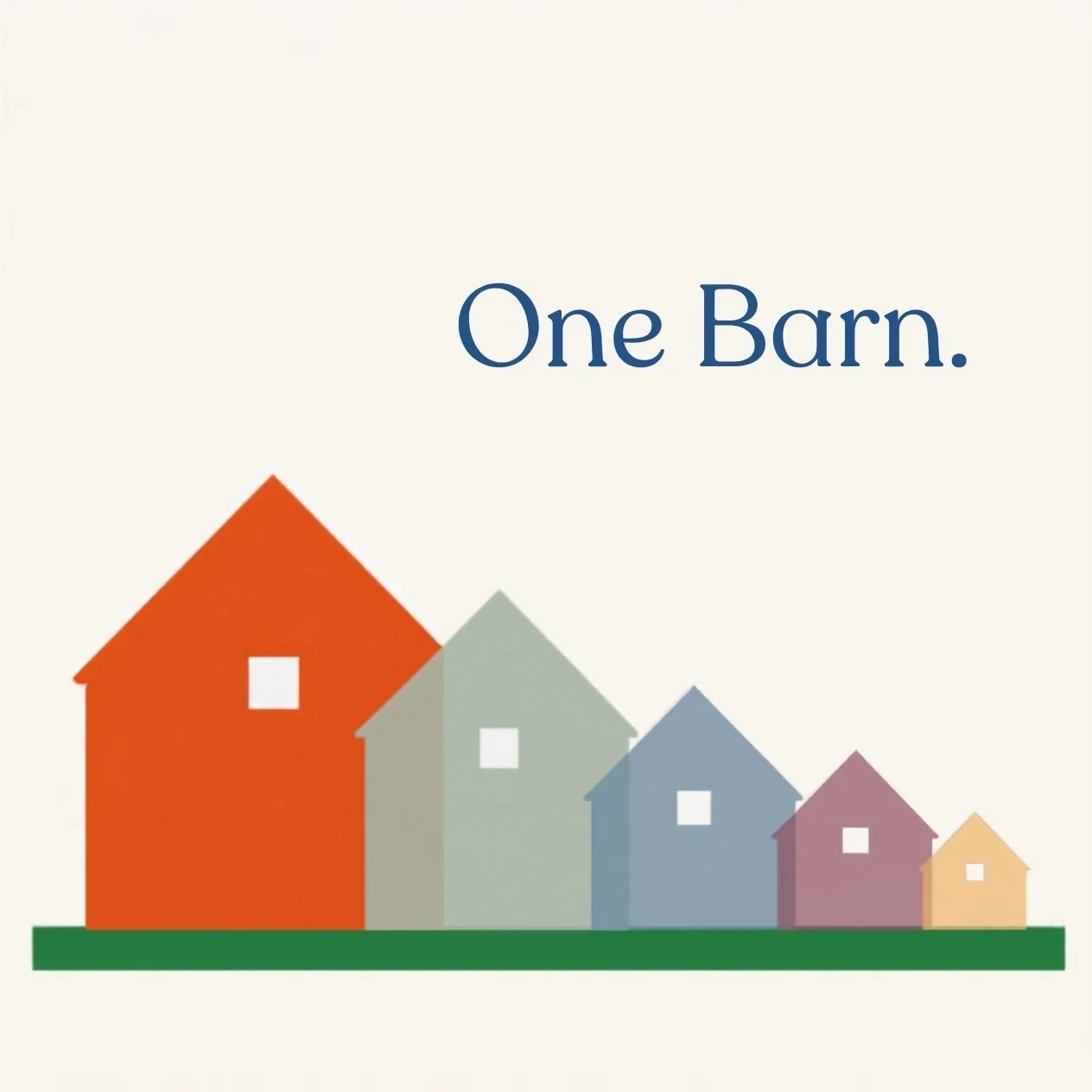
How one barn moved food through an entire system.
Two meetings, one answer
In early summer I sat at the annual meeting of a food systems nonprofit, at a table with an active client and a representative from the state department of agriculture. Earlier this month I was invited to a post-project site visit that doubled as a public relations event with the local state senator and his team. Different rooms, different people. When I asked the funders what kinds of projects they are really looking to approve, I got the same answer both times: a “good project.”
Not good ideas. Not projects that are simple to fund, implement, and close out. Not even farms and nonprofits with outstanding reputations. If reputation were the deciding factor, no one new, smaller, or less known would ever get in. What they meant was impact that travels off the farm. A project that reaches deeper into the food system and connects to other independent entities that already have their own systems in place to carry the work further.
The grants that fund the thing you need
Full disclosure. There are plenty of grants that fund equipment, machinery, walk-in coolers, and harvest crates. I wrote those grants for my own nonprofit farm and for my clients. They are worth doing. They drive efficiencies fast, cut labor, save time, improve working conditions, and lower production costs for that farm. Grants like these typically run $5,000 to $80,000, and the outcomes are real and measurable inside one to two years.
But what makes a grant competitive once the total project ask runs from $100,000 to $500,000? That is where “good project” starts doing the work.
What one $300,000 barn actually moved
My client's total project, a new barn with expanded dry and cold storage, was well over $300,000. Storage was the bottleneck. Three things were in place before I showed up: an up-to-date business plan, years of detailed harvest numbers, and accurate financial reports.
Further, they had access to land that was not being farmed because they had no place to store any additional produce grown. The land strengthened their case, but it was not required or scored. If you do not have more land, there are often ways to increase production even at the margins that can strengthen your case.
They also had diverse, established markets, and those buyers were committed to taking more produce and moving it out to consumers through their own systems. They had a SNAP payment system in place, and they had been working with area food pantries to get food directly to low-resource households.
For example, they sold through a food hub, and that hub sold the food through its mobile market across multiple cities and towns in the region, many with high rates of low-resource households. They ran a CSA and sold to a few local grocery stores. They also attended farmers markets that ran from spring into the winter season, but they could only attend spring through fall because there was not enough dry storage for storage crops. They were already an approved vendor with regular customers. The storage was the only thing standing between them and the winter market.
The channels, markets, and partners were all independent entities that wanted more of this farm's food and had the capacity to keep it moving locally on their own. That is what a funder means by "impact" that travels off the farm.
One grant, one barn. The local food economy expanded for the farm and for everyone downstream of it. The farm added on-farm jobs, put more food through the SNAP payment system, sold more produce to food hubs buying with state and federal dollars, and opened retail markets.
The outcomes were what you would expect: more dry and cold storage, increased production on existing land, new cultivation on fallowed land, and more food reaching low-resource households. The impact ran further than that. It moved through channels that were already built, already staffed, and already selling. That is the good project I believe sealed the award in the Department of Agriculture's mind. Deep and wide, five entities out from one barn: a food hub and its mobile market, farmers markets, a CSA, local grocery stores, and area food pantries.
Where to start
If your project is heading past $100,000, the positioning matters as much as the project. That is 100% worth talking through before you start writing.
If you are not there yet, that is useful to know too. Some farms need a business plan first. There is grant funding for that work, and there are people who do it well. I can point you to either.
If you are project-ready, start early. The farms that compete are the ones whose numbers, markets, and partners were lined up before the notice came out.
If you do not have a bookkeeper and or subscribe to a system like Ambrook, or quickbooks, put a system in place.
If you do not have an accountant, hire one. Every USDA grant requires a level of financial analysis and insight.
Let’s talk through your project.